We need more intersex stories.

From the publisher:
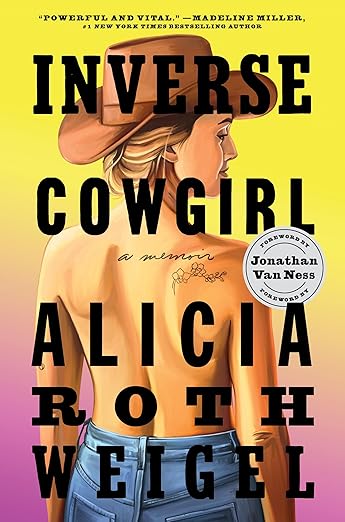
“From a celebrated activist on the forefront of fighting for intersex representation and rights—and a subject of the forthcoming documentary Every Body, from the filmmakers behind RBG—a funny, thought-provoking collection of essays about owning your identity and living your truth.
Two percent of the world’s population—the same percentage of humans who have naturally red hair—is born intersex. Yet many people aren’t even familiar with the word. Intersex individuals are born with both male and female reproductive organs, yet many are stripped of their identity at birth when a parent designates M or F on a birth certificate. That subjective choice is often followed by invasive, life-changing surgeries, performed without the individual’s consent. Intersex people have become a target of politicians, attacked for who they are and threatened by legislation that attempts to categorize and define them.
Alicia Weigel is fighting back against the hate and fearmongering to protect the rights and lives of everyone. As an activist and the Human Rights Commissioner for the City of Austin, Alicia has championed legislation to reduce sexual assault and human trafficking, mandate paid sick leave and abortion funding, decriminalize and alleviate homelessness, and target other social determinants of health. In this book, Alicia boldly speaks out about working as a change agent in a state that actively attempts to pass legislation that would erase her existence, explores how we can reclaim bodily autonomy, and encourages us to amplify our voices to be heard. Disarming, funny, charming, and powerful, this is a vital account of personal accomplishment that will open eyes and change minds.”
My Review
Purchase the book here. This blog will be supported with a small commission if you do so 🙂
First, this is the first Intersex book I ever read, which in many ways is a fault of my own. Weigel appropriately calls out that the queer community loves to reference the existence of intersex individuals (such as the diversity of chromosome groupings) to disprove the concept of a stark, static gender binary. However, to use the intersex community’s experience in this way without fighting for the political issues which effect them from birth is ignorant at best and malicious at worst. Intersex children should not have to suffer medical and social gender conformation, and we as the queer community aught to do better about acknowledging this.
In light of the above paragraph, my first impression review (especially as I was accidentally one of the earliest readers) was five stars. Looking back, I would probably put it about 3.5 out of 5.
Beyond that – this book is truly a mixed bag of highs and lows. Here is a brief roadmap of some of the highs and lows.
- Low – Jonathan Van Ness does the foreword. I think that their voice is an important one, but after hearing about recent abuses on the set of Netflix’s Queer Eye, this intro is shaded in a different light. (Also, Alicia still considers Jonathan a close friend – read into this as you will.)
- High – This memoir is in ten chapters, each named after one of Alicia’s ten tattoos. To each their own, but I personally found this concept quite cool, especially as a form of Alicia reclaiming her body.
- Low – Alicia tries really hard to acknowledge her severe privilege – she grew up travelling internationally, went to an ivy league, and has lived in luxurious apartments all over the world. She has held high-paying and high esteem positions in industry and politics since her early twenties. She is also a traditionally attractive straight woman, so much so that she is a model. All of this makes this memoir dramatically unrelatable for the vast majority of the population
- High – This book is honest and vulnerable about her childhood experiences, without devolving into “trauma porn”. Alicia establishes right away that excruciatingly detailing her trauma would both hurt her and not provide educational value to the ready. Her experiences should not be held for entertainment value.
- Low – Much like the highly privileged point, Alicia is constantly trying to remind the reader when she in proximity to non-white or non-cis people. Having diverse people around you is great, constantly trying to use them as proof of your activism feels… not great. I think her work as a human rights commissioner for the city of Austin is incredibly important, but I hope she finds away to uplift other marginalized voices while doing this.
- High – I think Alicia shines when it comes to discussing her time on the Texas session floor, and her work in the traditional politics sphere. She is best when she is fighting based on her own experiences.
I think this book is really great if you want to learn more about intersex people and one example of those experiences. I think if you want to read a book about activism, this book misses the mark in most of the ways it attempts. That being said, I would absolutely read any further books by Weigel.
Further Resources
You can learn more about intersex here https://www.hrc.org/resources/understanding-the-intersex-community
 I Read Queer Books
Leave a comment